1
This line establishes safety through clarity.
This is where you first encounter a topic and the structure that will hold you.
The goal is not change, but security.
Here you will understand what you are engaging with, how the space works, and what is expected or not expected of you.

2
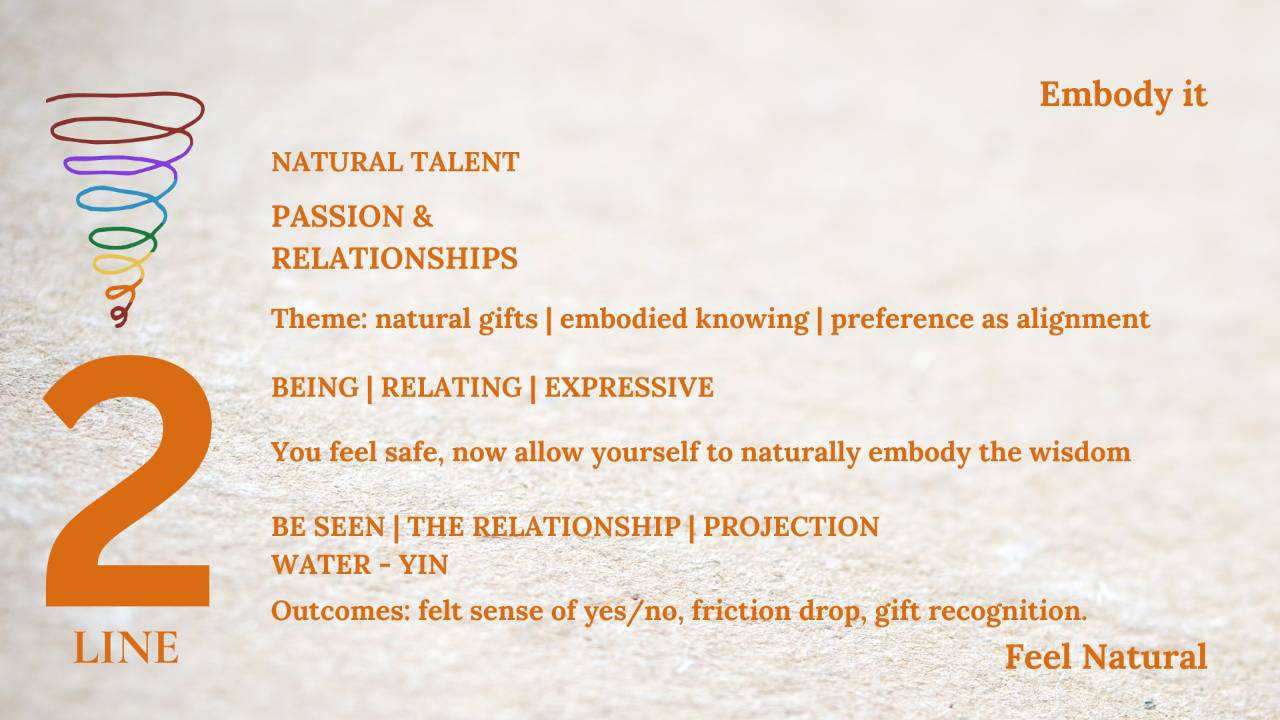
This line moves the teaching out of the mind and into the body. This is where you begin to feel the information rather than think about it.
The purpose is not interpretation, but attunement.
Find your natural rhythm with the topic through sensation, pace, and embodied presence.
3
Line 3 invites you to engage the teaching actively through experimentation. What has been understood and embodied is now tested in lived experience. This line normalizes trial, error, and adjustment as essential to learning.
4
This line moves learning into relationship. What has been experimented with privately is now shared within community, networks, or relational spaces. The focus is not persuasion or agreement, but resonance and connection.
5
Here is where you step into authorship.
After grounding, embodying, experimenting, and sharing, you now articulate the teaching in your own language. This includes rephrasing, challenging, reframing, and even disagreeing with the original teaching based on lived understanding.
6
This final line before a new cycle begins is where you allow the teaching to recede into the background so integration can occur.
You are no longer trying to do anything with the information. You witness it as a whole from an embodied perspective shaped by time, experience, and presence.